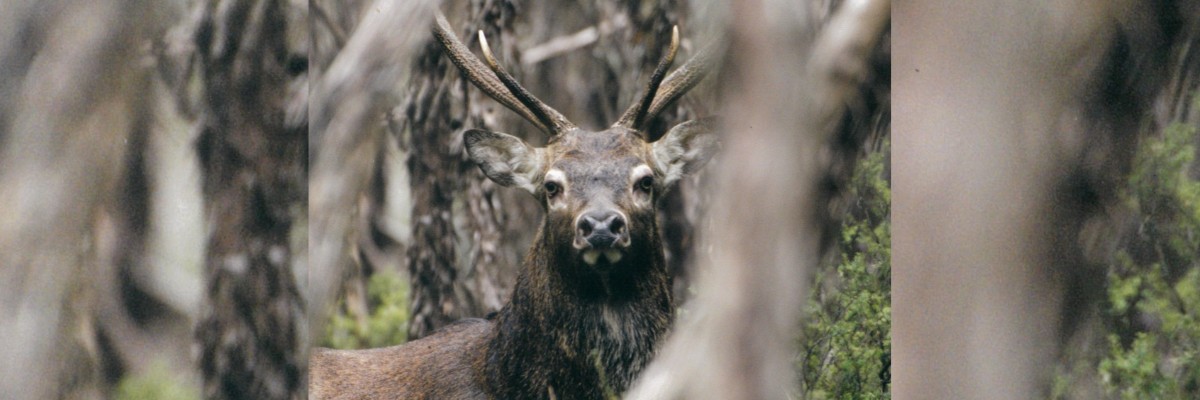
Hunters and farmers need to connect to help farmers struggling with deer numbers.
NZDA has been helping farmers tackle wild goats for four years now, but farmers concerned about growing deer numbers on their properties need to accept that managing animals on private land is, ultimately, a landowner responsibility. But New Zealand's recreational hunters are ready and willing to help.
Farmers and landowners are already getting involved by collaborating with NZDA Branches across the country. Farmers are adding their properties to a growing list available to hunters as part of the DOC-NZDA National Wild Goat Competition. The right connections are forming directly with local NZDA hunters, who are given access supported by a written agreement on conditions set by the farmer.

The New Zealand Deerstalkers Association has a simple message to farmers – we are here to help, but we do need scale. A concerted effort, supported by organisations like Federated Farmers, is needed to raise awareness of the benefits of practical partnerships that connect farmers experiencing problems with wild deer directly with local NZDA members.
Recent debate around wild deer has focused heavily on increasing animal numbers, damage to pasture and crops, and calls for greater government intervention and taxpayer-funded control.
There is no question that some farmers have genuine problems with deer, pigs and goats. Where animals are causing significant pasture loss, crop damage or other impacts, those concerns should be taken seriously.
But we also need to be candid about how those situations arise.
If deer numbers have been allowed to build up on private land over a number of years, while recreational hunters have had little or no access to that country, it is difficult to argue that hunters are responsible for the resulting problem.
Private property rights matter, and NZDA encourages and supports lawful hunting and the right of farmers to do what's best for them. Farmers are entitled to decide who enters their farms and under what conditions. But with that right comes responsibility for managing what happens on the property.

In many parts of New Zealand, hunters are actively looking for places to hunt while, sometimes only a few kilometres away, farmers are saying they have too many deer.
That disconnect makes little sense. NZDA represents thousands of recreational hunters through 50 branches around the country. Many of those hunters are experienced, responsible firearms licence holders who already maintain long-standing relationships with farmers and regularly remove deer, pigs and goats from private land. Those arrangements can work extremely well.
They provide farmers with ongoing wild animal hunter-led management without automatically reaching for expensive commercial operations or taxpayer-funded programmes. They provide hunters with valued access and opportunities to obtain wild food. And, importantly, they can create long-term relationships where hunters become familiar with the property and can respond when animal numbers begin increasing.
That is why NZDA is calling on farmers and Federated Farmers to own the issue and collaborate. Talking about the problem does not solve it.

Rather than continuing an increasingly polarised public debate about whether deer are a pest or a valued game animal, we want to focus on something practical: putting farmers who genuinely need help in contact with hunters who genuinely want to help.
The solution will not be identical on every farm.
Some properties may need a small group of trusted hunters visiting regularly. Others may benefit from organised club hunts or targeted efforts at particular times of the year. Properties with very high animal densities may still require professional control alongside recreational hunting.
But recreational hunters should be part of the solution, not treated as an afterthought.
New Zealand has an enormous voluntary hunting resource. Hunters invest their own money in vehicles, firearms, equipment, fuel and travel. They contribute their own time and, in many cases, are more than willing to assist landowners without asking the taxpayer to fund the activity.
The challenge is access, access, access.

Farmers understandably have concerns about health and safety, stock, gates, vehicles, fire risk and knowing who is on their property. Those issues are manageable. NZDA clubs already deal with organised hunting, hunter education and relationships with landowners throughout New Zealand.
What we need is a mechanism for matching the right hunters with the right properties.
NZDA is therefore asking the farming community to be proactive and to work with us on a straightforward referral system. Farmers who are experiencing genuine problems with wild animals could identify themselves, and NZDA could work through its local branch network to identify suitable hunters.
That is a far more constructive starting point than simply calling for more public money to kill deer.
There also needs to be some balance in the wider discussion. NZDA does not advocate unlimited deer numbers. We never have. We support properly managed wild game populations in balance with the environment and recognise that densities must be appropriate to the land and the circumstances. But deer are also a highly valued hunting resource, a source of free-range food and an important part of New Zealand's outdoor culture.
The answer is management. Management means forming a plan and coordinating its delivery with known aims and outcomes - it's not letting the odd friend or known hunter access the back of the farm every other month.

Where farmers have too many animals, hunters can help reduce them. Where numbers are already low, there is little sense in indiscriminate control. And where private land provides refuge for increasing deer populations because hunting access has been restricted, that needs to be acknowledged as part of the conversation.
Farmers and hunters should, naturally, be allies on this issue. Both groups understand the land. Both value practical solutions. Both have an interest in sensible animal management rather than bureaucracy and waste.
NZDA is putting a practical offer on the table. If farmers have too many deer, tell us where the problems are and give responsible hunters an opportunity to help. Thousands of hunters around New Zealand are ready to answer that call.
A list of branch contacts can be found here.